
Alexandria Deed Records and Their Instrument Types
The Clerk accepts many land instruments for Alexandria property. Deeds, deeds of trust, mortgages, leases, contracts of sale, assignments, transfers, and vesting instruments all appear in the record. A deed's effect depends on its text. A deed of trust secures a debt, and a release lifts an encumbrance. Keep those instrument roles separate.
| Deed Type | What It Does | Common Use |
|---|---|---|
| Deed | Conveys an interest described in the instrument | Sale, gift, family or entity transfer |
| Deed of trust | Creates a recorded security interest | Financing tied to real estate |
| Release | Records release of a described interest | Search separately from a later deed |
| Assignment | Transfers an interest or instrument | Follow the named parties and reference |
| Lease or contract | Records an instrument affecting property rights | Read the instrument type and terms |
A new deed of trust is not a sale. Refinancing creates a fresh security instrument without conveying title, and a release may be indexed under the lender or trustee. Find the newest deed that transfers title. Then confirm its legal description matches the parcel in question.
Alexandria's COVERS Index and Remote Images
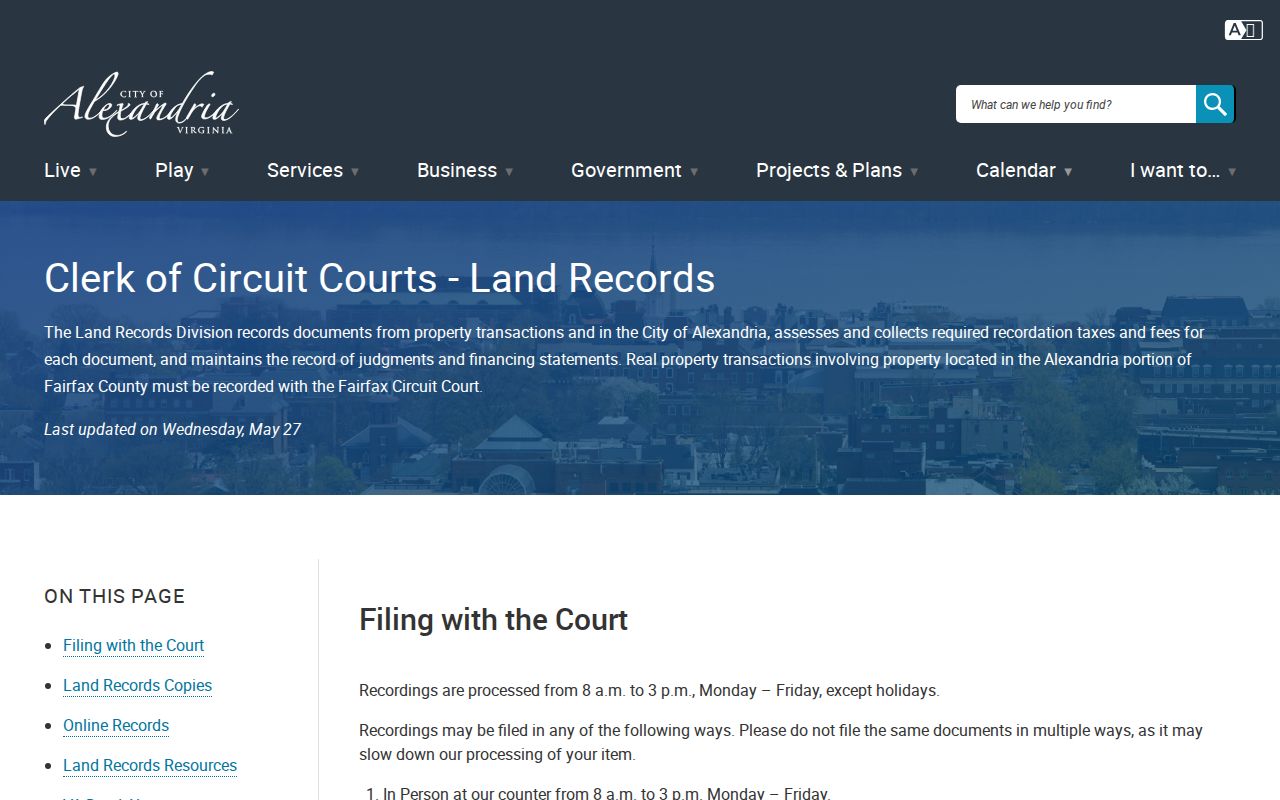
Alexandria land instruments live online. The Virginia Supreme Court's COVERS and Secure Remote Access system carries them. New subscribers get a free first 30 days. Paid access follows, and courthouse terminals are another route. Remote access stays inquiry-only under the subscriber terms, which permit search, view, and print functions. A result and an image are separate steps. Note the index reference even when the image waits behind a sign-in or subscription prompt. Recent instruments are the easiest to reach this way. The Clerk remains the custodian of the record and can explain the proper copy request. The official Land Records page posts current contact and access details, plus holdings, fees, hours, and the deed-alert service.
Ambiguous results need a closer look. Compare the parties, record date, instrument type, and parcel description, and never call an owner from a name-only match when the legal description points elsewhere.
Alexandria Deed Records Span Online and Paper Eras
Alexandria's record spans two eras. Physical land records run from December 1782 through October 1993. The online index covers January 1785 through 1798 and everything after January 1930. That leaves a sizable online gap. Printed indexes, books, and microfilm fill the physical holdings. A remote-only search can miss an earlier instrument. The two start dates are not a contradiction, since the physical series begins before the stated online index span.
Gap-era research works backward. Find the current deed reference first, then trace the grantor named in that deed. Printed indexes and book/page citations keep the chain moving. The Library of Virginia also catalogs Alexandria deed indexes from 1783 through 1870, along with selected deed books. Its catalog helps locate a reel or series, but not every older page has a remote image.
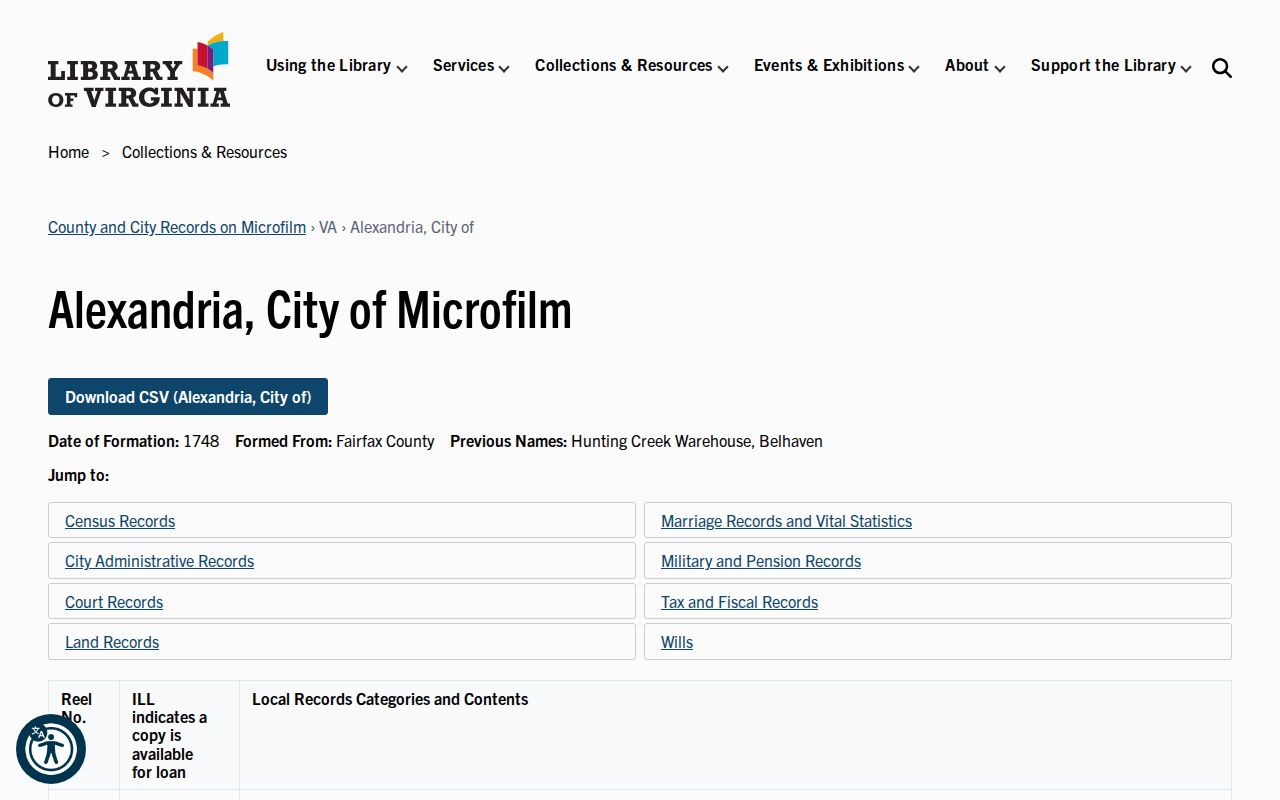
The Library of Virginia Alexandria microfilm catalog lists deeds, land tax, wills, marriage, and census material.
Paper preserves what pixels skip. Physical books can keep handwritten legal details, marginal notes, index annotations, and book references that remote search never fully captures, so save the reel and book citation with your result.
Trace an Alexandria Grantor-Grantee Chain
A chain of title runs backward. Start with the latest deed for the parcel. Work from the grantee backward. Each earlier transfer should be recorded as a full evidence row rather than a pair of names, with the legal description and parcel reference confirming the same land rather than another property held by a similarly named party.
- Locate the latest deed and record its instrument type, record date, grantor, and grantee.
- Copy the legal description, parcel or map number, and book/page or instrument reference.
- Search the current grantee as a grantee for the earlier acquisition.
- Read the prior grantor and search that person as grantee in the earlier date range.
- Repeat until the online cutoff, then continue in the Clerk's books or the cited microfilm.
- Grantor
- The party conveying an interest in the instrument.
- Grantee
- The party receiving the stated interest.
- Chain of title
- The ordered set of instruments that records successive transfers.
- Book/page or instrument number
- The Clerk's reference for locating a recorded document.
Names can hide roles. Run trustee and trust names separately. An executor's or administrator's signature on a deed points to an estate file that may explain the authority and the parties involved. A quitclaim passes only the interest described, and a warranty deed's promises come from its own terms rather than an index label.
Alexandria Recordation Tax Is a Clue, Not a Value
Virginia collects a recordation tax. It applies when certain instruments are first offered for recordation. The City's published schedule sets a state tax of $0.25 per $100, or fraction, of purchase price or fair-market value, with an Alexandria tax equal to one-third of the state amount. Deeds, deeds of trust, mortgages, leases, contracts of sale, assignments, transfers, and vesting instruments can fall within those recorded-instrument categories. Use the current fee calculator for any filing.
Tax stamps are clues, not values. A consideration amount can help when the assessment sales table has not updated. It is not an appraisal. It is also not the assessed value or an unpaid loan balance, and gift, family transfer, assumption, exemption, refinance, or nominal consideration can push the number far from an open-market price.
Preserve the recorded facts. Note the date, parties, legal description, and reference. That number is not a valuation. Never let it replace the assessor's value fields or a current appraisal.
Alexandria Deed Records Can Be Monitored with VADeed Alert
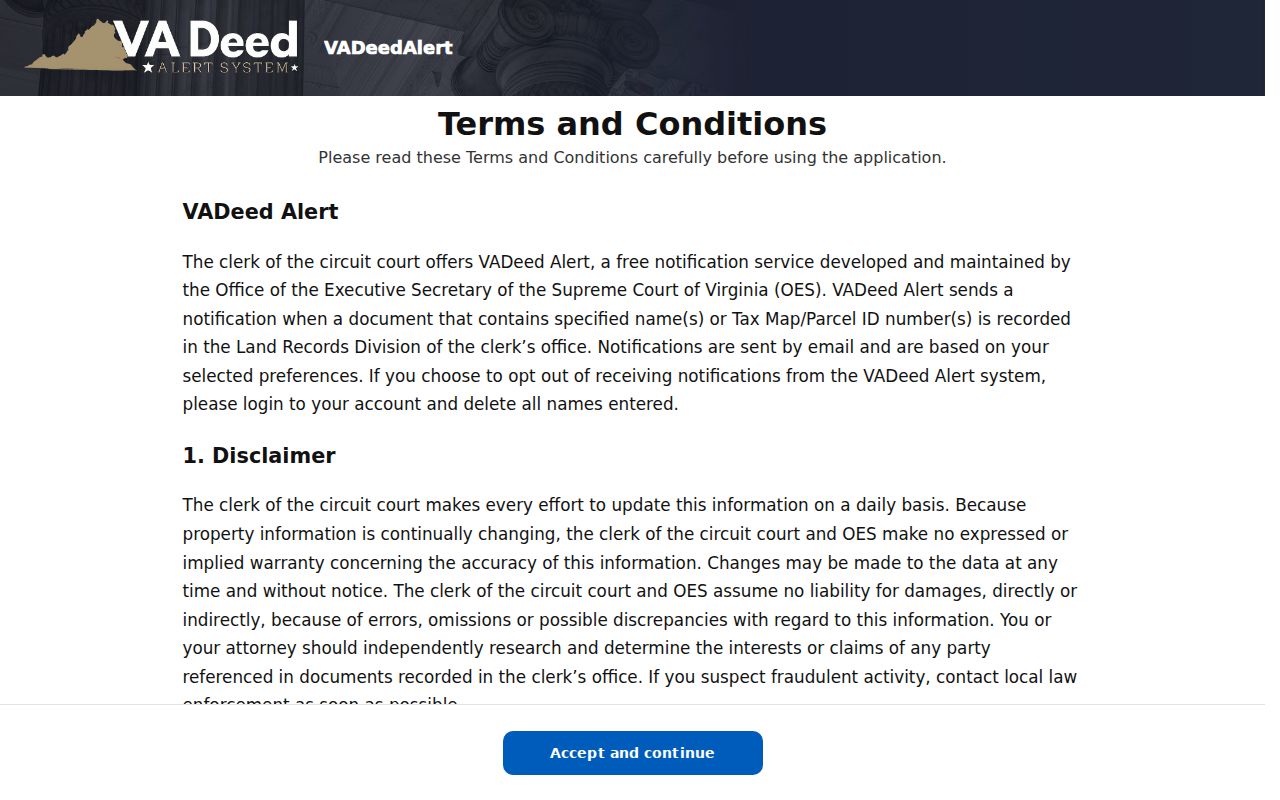
Virginia offers a free monitoring service called VADeed Alert. A registrant can track names, tax-map numbers, and parcel variations for deed and mortgage activity. It is a notice tool only. It is not an ownership registry. It never replaces checking the recorded instrument with the Clerk. Registration lets you add name spellings and parcel forms that fit the property. The Clerk links to the VADeed Alert registration service for sign-up. When a notice arrives, treat it as a prompt to inspect the underlying deed record. Confirm the parcel number matches. An alert may help an owner react to unexpected activity quickly. It does not prevent recording, though. It cannot resolve a title dispute on its own.
Keep your monitoring notes private and centered on the parcel. If an unexpected document appears in Alexandria deed records, contact the Clerk or a qualified property professional with the instrument reference in hand.
Reading Alexandria's Grantor and Grantee Index
Grantor and grantee are index roles, not permanent labels. The grantor conveys the stated interest in an instrument. The grantee receives it. The same name can show up in both roles across a chain of deed records, so read each entry for what it does rather than who a party is. Working a chain backward takes two steps. Search the party from the newest deed as a grantee to find the earlier acquisition. Then move to that deed's grantor for the next step back.
- Find the latest deed in which the present recorded grantee took title.
- Read the grantor, instrument type, parcel description, and recording reference.
- Search the grantor's earlier acquisition as a grantee and compare the land description.
- Continue in paper indexes or microfilm when the online period ends.
- Grantor
- The party conveying the interest described in an instrument.
- Grantee
- The party receiving that stated interest.
- Chain of title
- The sequence of recorded transfers for the land.
- Book/page or instrument number
- A citation used to locate the filed record.
How to Get an Alexandria Deed Copy
Once you have the instrument reference, request a copy through the Clerk's published land-record process. Remote viewing and printing may be possible through COVERS when the subscriber has image access. Counter and mail routes are also available. A mailed request should identify the parties, the record date, the instrument, and the book/page or other reference, include payment as instructed, and include a self-addressed envelope where required. The Clerk's page lists copy charges of $0.50 per page and $2 for certification. Verify the current fee schedule and calculator before sending anything. The land-record office sits at 520 King Street, Room 307, Alexandria, VA 22314, and lists 703-746-4044. Court records are public under Title 17.1, not under ordinary FOIA rules. Ask the Clerk about the correct copy channel before filing a general records request. Skip duplicate requests through multiple routes, since the Clerk warns that duplication can slow processing.
Recorded, not guaranteed. The index shows recorded instruments, not a legal opinion that title is clear. Compare the deed and legal description, and use a title professional when a transaction depends on the full chain.