
Alexandria Former Owners: The Backward Deed Table
A chain table grows from the newest transfer toward the oldest. Each row stands for one instrument. It should hold enough detail to prove it concerns the same land. Think of it as a worksheet. Fill in a row only from a deed you have located or a volume you can cite. Never use a guessed Alexandria transaction.
| Source | Years It Covers | Where Held | What It Shows |
|---|---|---|---|
| Most recent deed | Record date from instrument | Grantor to grantee | Type, book/page or instrument no., legal description |
| Prior acquisition | Earlier record date | Earlier grantor to present grantee | Parcel match and cited instrument |
| Older index entry | Year shown in index | Search prior grantor as grantee | Index citation and book reference |
| Microfilm or deed book | Year and volume on reel | Names as indexed in that era | Reel, index span, book, page |
Use COVERS for the online years. Printed Clerk indexes and deed books cover the gap. The microfilm catalog identifies older reels worth ordering. A plat helps match lot and block wording to the parcel number. A tax roll or directory can hint at who held title in a given year. Those context sources support the work, but only a deed row belongs in the chain of title.
How Far Back Alexandria Deed Records Reach Online
The Circuit Court Clerk holds physical land records from December 1782 through October 1993. The online index covers January 1785 through 1798. It resumes after January 1930. That gap is a coverage limit, not proof a transfer never happened. When an online search ends, record the last citation. Then ask which printed index, deed book, or microfilm series picks up the next year.
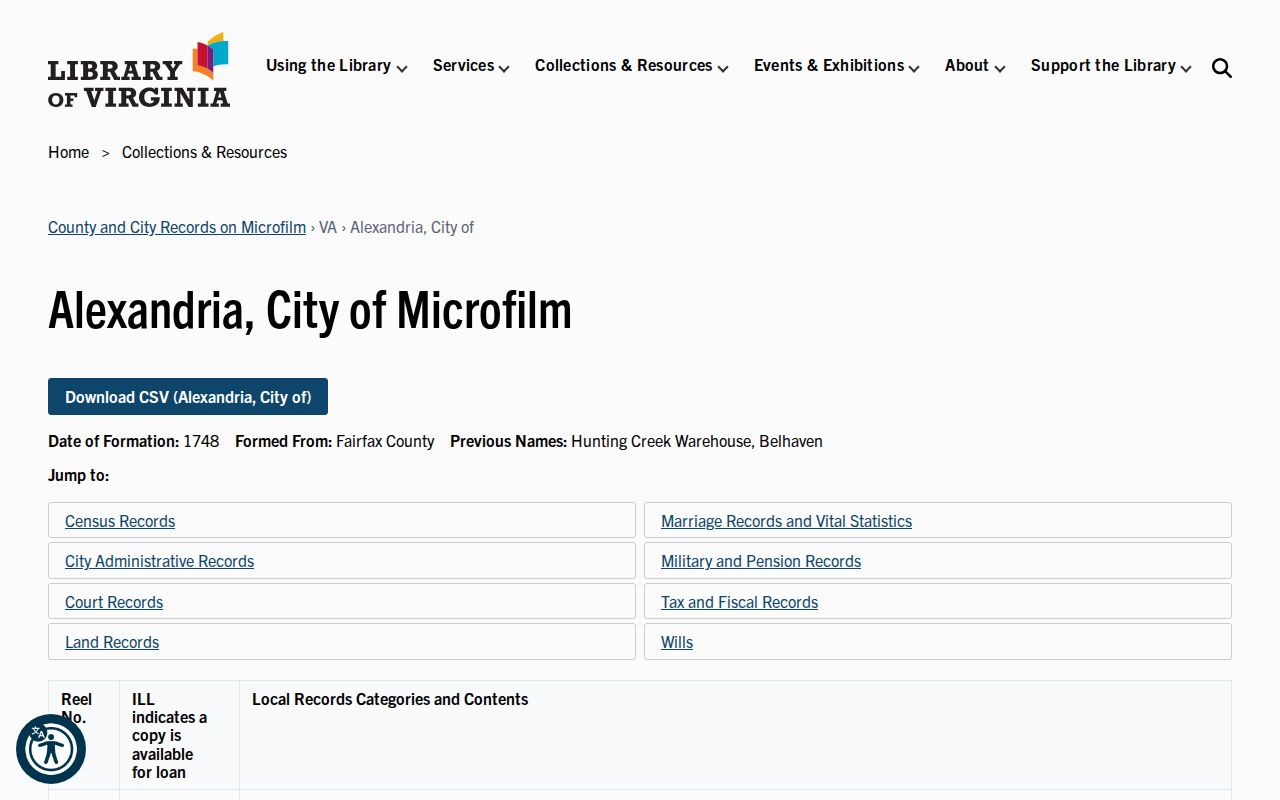
The Library of Virginia's Alexandria catalog lists general deed indexes from 1783 through 1870. It adds selected deed books as well. Its finding aid names a reel and record group. Carry that exact citation when consulting microfilm or requesting a physical volume from the Clerk. The catalog's deed and land-tax series appear on its Alexandria page. The Library of Virginia Alexandria microfilm catalog is a separate route. It runs outside the remote COVERS image system.
Older physical deed books can hold handwritten legal details, annotations, and marginal references. No name search returns those.
Walking an Alexandria Chain of Title Backward
Start from the newest deed and step back through the prior owner's acquisition. The prior deed names a grantor. That grantor becomes your next search target. Never assume a familiar surname means the same person or parcel. Confirm the legal description at every link.
- Record instrument type, grantor, grantee, recording date, and reference.
- Copy the complete legal description and parcel identifier.
- Search the grantee in an earlier date range to locate the acquisition.
- Use the prior grantor as the next backward search key.
- Move to books or microfilm when the online coverage stops.
- Grantor
- The party conveying the interest described in an instrument.
- Grantee
- The party receiving that stated interest.
- Chain of title
- The ordered sequence of recorded instruments for the land.
- Legal description
- The text that identifies land independently of its street address.
A trust or estate may sit inside the chain. Search the trustee and executor names, and open the related court record to learn the source of authority. An executor's deed reads differently from a standard sale. It still counts as a link in the property's recorded history.
Alexandria's Historic Borders Change the Search Terms
Alexandria belonged to the District of Columbia from 1801 until retrocession in 1847. The City's border history also records later annexations through 1973. An early deed index may use a place name that differs from today's independent city. Search the jurisdiction term of the period. Adjacent county material can matter more than a modern city label.
The official Old Town founding plat is reported in Fairfax County's Record of Surveys. That clue matters when a target lot began as an early surveyed parcel. A current Alexandria address does not guarantee every earlier survey or deed was filed under the present locality name.
Note: Historic border maps are research aids, not boundary surveys, so keep the Clerk's deed, legal description, and plat citation together when reconciling a location across time.
Alexandria Estate Transfers Can Change the Chain Names
A former owner may have conveyed the property through a trustee, executor, or administrator. That is common in estate situations. In those cases, record the fiduciary's name and the estate or person represented. Record the instrument type and the legal description too. Search the trustee and the trust name separately. For an executor or administrator deed, use the estate file. It identifies the decedent and the authority granted.
A later deed of trust or release can follow the ownership deed. It does not change the owner of record. Treat the newest deed and the newest financing instrument as separate records. This keeps a refinance from masquerading as a transfer. It also explains why a lender or trustee name shows up in a later index row.
When the index gives only a name and a reference, inspect the instrument image or the physical book before adding anyone to the chain. An estate record clarifies the role. The deed itself remains the property-transfer evidence.
Use Alexandria House-History Sources as Leads
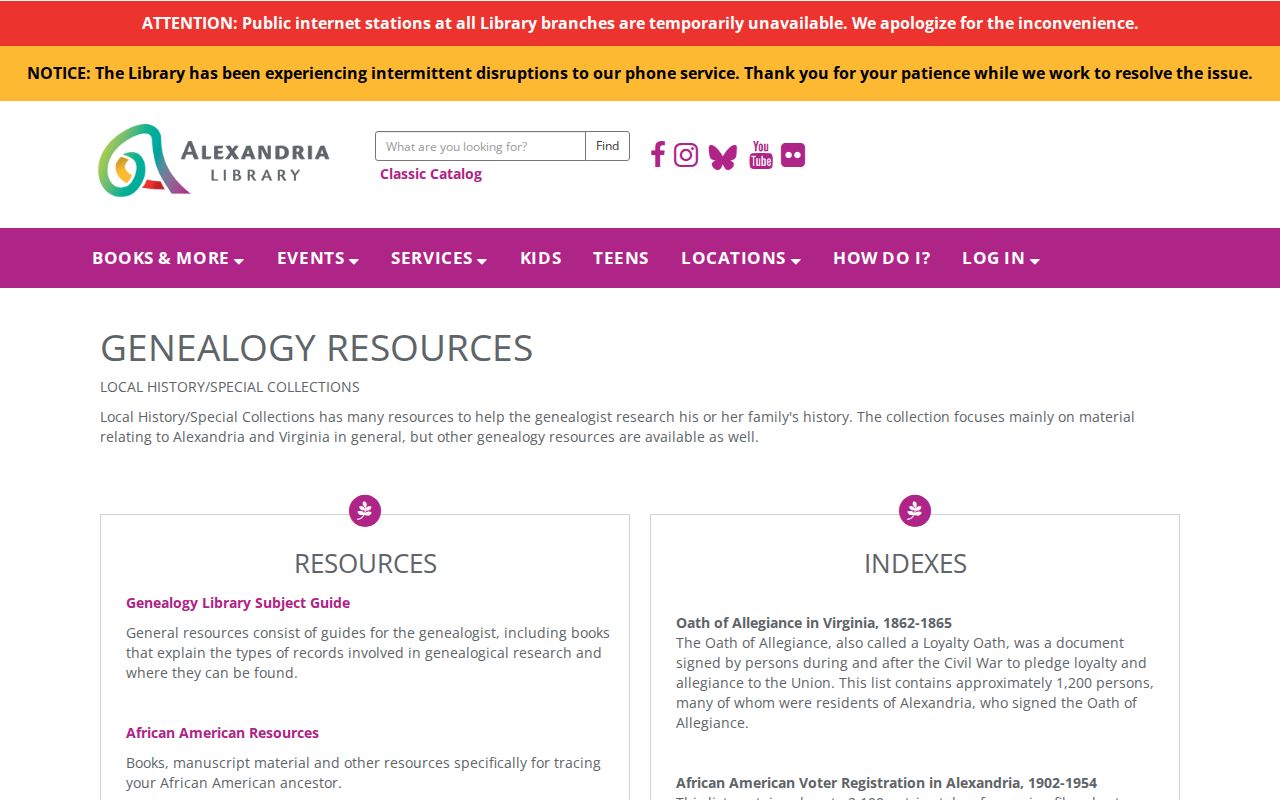
Alexandria Library's Local History/Special Collections combines deed and will microfilm with house-history guides, city directories, historic photographs, Gazette indexes, cemetery volumes, and other local sources. A useful workflow starts with the present address, checks whether an older street number or owner can be found, then returns to land records for the legal transfer. Transcribe directory abbreviations and owner or renter marks exactly because they can change the meaning of an entry.
The library's Gazette obituary indexes cover 1784-1915 and 1916-1946 in separate compilations. An obituary may connect a family to a residence, but it may not include an address and does not establish title. The library also indexes naturalization petitions for 1909-1929 and local voter and poll-book material; these are historical context rather than a current owner database.
Alexandria Archives & Records Center requests require FOIA and access is by appointment. The library is a separate public research route. Its Local History and Special Collections guide describes local indexes.
Label every household clue as context, and keep each library citation next to the deed reference it helped you locate.
Reading an Alexandria Chain of Title Backward
Give every instrument in the chain its own line. Record the type, the parties, the record date, and the book/page or instrument number. Add the consideration if shown. Note the legal description, the parcel number, and whether an image was viewable. Each entry should also name the next search key for the step backward. A trustee's deed, an estate sale, or a shifted lot description will stand out immediately in a log this disciplined. It flags the exact spot where the chain of title needs extra work.
- Find the latest deed for the parcel and note its grantee.
- Search that grantee's prior acquisition and compare the legal description.
- Take the earlier grantor as the next search key.
- Continue through the Clerk's older indexes, books, or LVA reels.
- Grantor / grantee
- Transferor and recipient named in that instrument.
- Chain of title
- The chronological path of instruments tied to the same land.
- Legal description
- The parcel text to compare when addresses or boundaries changed.
How Far Back Alexandria Ownership Evidence Goes
The Clerk's stated online periods govern the remote deed index. When a year falls between those windows, move to physical sources. The physical deed run begins in December 1782. The cataloged general deed indexes start in 1783. Alexandria's early ties to the District of Columbia and to Fairfax County can change the name under which a predecessor deed was filed, so search under each jurisdiction a parcel once belonged to. A gap in a modern search screen is not proof of a first owner. It signals that a broader historical property search is due, one that reaches past the indexed years and into the older record books.
Lawful use. Former-owner research supports house history and property diligence. Do not use names or addresses to track, harass, threaten, or harm a living person.